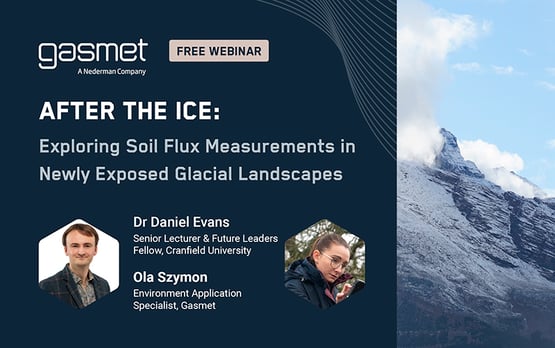
As glaciers retreat, what happens to the ancient carbon contained in the rocks and sediments they leave behind?
Join Dr Dan Evans from Cranfield University as he shares experiences from a field campaign in British Columbia, investigating carbon cycling at the earliest stages of soil formation.
The webinar will introduce the team’s research into petrogenic organic carbon (organic carbon inherited from rocks) and explore the practical challenges of measuring gas fluxes in remote glacier forefields. Through field photos and examples, Dan will discuss how portable FTIR gas analysis supports this research, lessons from deploying the equipment in a mountain environment, and the questions guiding the next stages of the work.
The free webinar will take place on WED 4th of November, from 2-3 pm (UK time) / 4-5 pm (Helsinki time). It will explore:
- Why newly exposed glacier forefields offer valuable opportunities to investigate ancient carbon and the beginnings of soil formation
- How portable FTIR gas analysis and chamber measurements are used to investigate gas fluxes in remote landscapes
- Practical lessons from the British Columbia campaign and the next steps in understanding the fate of rock-derived organic carbon
Speakers
- Dr Daniel Evans, Senior Lecturer in Soil Formation & UKRI Future Leaders Fellow, Cranfield University
- Ola Szymon, Environmental Application Specialist, Gasmet Technologies
Dr Daniel Evans's research explores how soils form from geological materials and how these processes influence carbon storage and cycling. His Fellowship programme “Today’s Carbon in Tomorrow’s Soils” investigates the origins, movement and persistence of organic carbon across the soil–bedrock interface. His work includes research on developing soils in glacier forefields, undertaken with international collaborators.